Global air cargo keeps climbing, with IATA forecasting 2025 volumes of 69 million tonnes. That puts pressure on operators to run tighter fleets, cut avoidable costs, and mitigate safety risks.
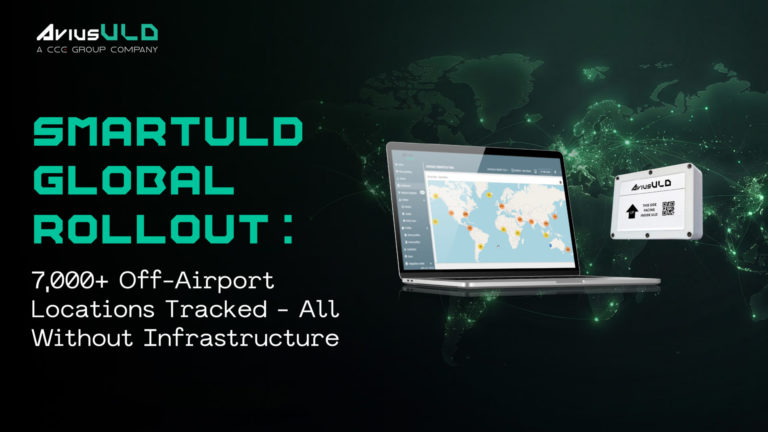
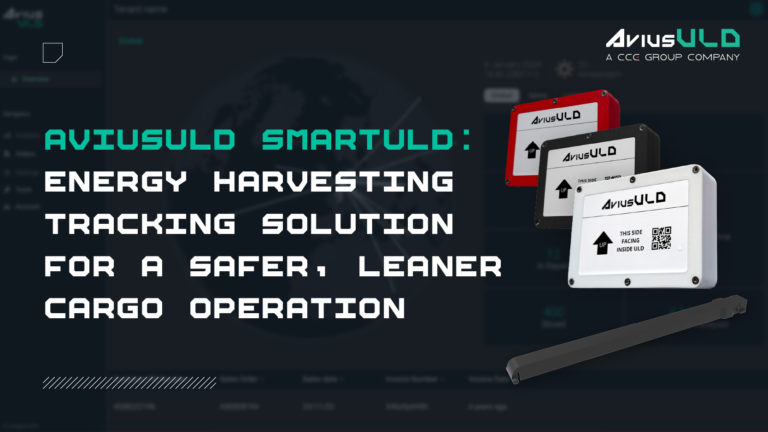
The answer is SmartULD by AviusULD: a range of self-charging trackers and a data platform designed by AviusULD and our technology partner eLOC8. The idea is simple: continuous power, ubiquitous connectivity, and sensors that help you catch problems early – without building new airport infrastructure.
How it works
At the core of the solution is a patent-pending kinetic energy harvester that converts vibration and motion into power, continually recharging the device. That steady energy supply allows the device to communicate using 4G connectivity that eliminates the need for reader infrastructure and allows real-time reporting of relevant event and telemetry data. The Flight Safe protocol ensures communication is switched off whilst in the air.
For location, SmartULD blends global LTE Cat-1 BIS with A-GNSS outdoors and Wi-Fi multilateration indoors; where you need room-level precision, BLE 5.4 Angle of Arrival (AoA) can resolve position to about 20 centimeters accuracy.
The AviusConnect data platform is where data turns into action: device management and Over-The-Air updates, map views and geofences, configurable alerts (including Fire Tag alarms), history tools like heat maps and movement path visualizations, and a customizable API to your control tower. The AviusULD SmartULD devices have the ability to ingest data from non-AviusULD tags, which helps customers who have already deployed earlier generations of tracking devices to upgrade their tracking solution whilst still benefitting from expanded visibility of their incumbent limited battery-life tracking devices until they reach end of life.
The AviusULD SmartULD product portfolio
SmartULD Tag (Standard): The baseline device covers global tracking and motion-based eventing with environmental telemetry options (temperature, humidity, pressure). No fixed readers are required; the devices transmit their data to the backend using 4G.
SmartULD Fire Tag: Lithium-battery related incidents are rising – FAA-based reporting shows an increase of roughly 388% since 2015, now nearly two per week – so early warning matters. The AviusULD SmartULD Fire Tag uses hydrogen and VOC (Volatile Organic Compound) sensors together with on-device logic to detect off-gassing, giving operators a greater time window to intervene before smoke or fire causes operational disruption, damage or safety incidents.
SmartULD Occupancy: Using sensors, the Occupancy device scans internal space, builds a 3D picture of what’s inside, and confirms fullness and placement. That reduces missed loads, tightens turnarounds, and provides a clear utilization signal for planning.
SmartULD Pallet Tag: A rugged, self-charging tag that mounts cleanly to the pallet edge rail via a C-track design. It runs on LTE-M with Wi-Fi multilateration and BLE 5.4, and its MESHLOCK feature helps manage stacked pallets.
From trial to operations
Early trials deployed a limited number of devices over 6 months to validate battery life, connectivity, location accuracy, API links, and event detection. Outcomes included flight-mode procedures aligned with airline requirements and finalized Safe Flight algorithms, along with practical improvements: tighter energy management, improved kinetic/accelerometer sensitivity, and the addition of Wi-Fi multilateration and assisted GNSS. These improvements also laid the foundation for predictive machine-learning forecasting of ULD stock levels, giving operators a clearer view of future demand and availability.
What this gives operators
ULD management is critical to passenger and cargo operations. Airline operators need to continuously ensure that ULD’s are available for flights in the right quantity, in the right condition at the right time at airports all over the world. To achieve this, airline operators typically buy more ULD’s compared to how many would be strictly needed based on flights and aircraft types because stock visibility of ULD’s has relied on poor data quality and sub-optimal often manual processes,
The AviusULD SmartULD solution helps airline operators manage their ULD fleets more efficiently. ULD’s are turned into self-reporting equipment that reports its whereabouts anywhere and all the time. There is no need for cumbersome and costly reader networks. The ULD’s report their whereabouts from all locations as opposed to incumbent tracking solutions that only report their whereabouts from locations where readers are installed.
Other areas of benefit include eliminating manual stock takes and recording weekly stock control messages (SCM’s), shifting accountability for damages to the ULD from the asset owner to those parties responsible for causing the damages to the ULD, improving the operators’ processes for managing demurrage and reducing the impact of Lithium-Ion battery related safety incidents.
Contact us today to find out how our SmartULD solutions can enhance your air cargo operations.